
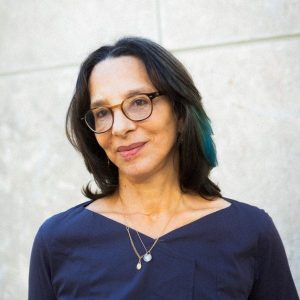
At Kalaniyot, we are proud to celebrate the journeys of Israeli scholars who embody our mission: to learn, lead, and give back. Prof. Tanir Allweis, Kalaniyot Visiting Fellow (alumna, 2025-26), is a leading Israeli physician who crossed disciplines at MIT and is now translating cutting-edge AI research into better care for women across Israel.
As a Kalaniyot Visiting Fellow, Prof. Tanir Allweis spent three months at MIT's Computer Science and Artificial Intelligence Laboratory (CSAIL) and the MIT Jameel Clinic for Machine Learning in Health, working with Prof. Regina Barzilay on Mirai — a deep learning model that reads a single mammogram and predicts a patient's five-year breast cancer risk. She came home with more than new knowledge. Hadassah Medical Center is now weeks away from running Mirai in three clinical research studies, and Prof. Allweis has opened a partnership with Clalit Health Services, Israel's largest HMO, to explore bringing the technology to a national scale.
The Problem That Brought Her to MIT
Prof. Allweis has spent 25 years as a breast surgeon. A graduate of the Hebrew University School of Medicine, she completed her general surgery residency at Hadassah University Hospital, a surgical oncology fellowship at the National Institutes of Health, and a breast surgery fellowship at the Washington Hospital Center in Washington, DC, before returning to Israel. Today she chairs the Department of Breast Surgery and directs the Multidisciplinary Breast Health Center at Hadassah Medical Center, and is Professor of Surgery at the Hebrew University Medical School and Chair of the Society of Breast Surgery in the Israel Surgical Association.
Throughout, she'd had a long-standing interest in one particular problem: breast cancer screening still largely treats every woman the same, even though risk varies enormously from woman to woman. “I have had a long standing interest in personalized breast cancer risk assessment and risk-based screening,” she says. She had been following Prof. Regina Barzilay's lab at MIT since its first Mirai publication in 2019. Eventually, watching from Israel wasn't enough. She reached out to Prof. Barzilay directly in early 2025, who invited her for a sabbatical. “As a practicing clinician I can't take too much time away from the hospital, so we settled on a 3-month visit at the end of 2025,” Prof. Allweis says. That visit became her Kalaniyot Visiting Fellowship at CSAIL and the Jameel Clinic.
“I am not by any means a computer scientist, not even remotely,” she candidly admits. “I have never written as much as a single line in code.” Instead, Prof. Allweis spent her fellowship becoming fluent in the technology and the team behind it, and mapping out how Mirai could be implemented in her own tertiary hospital. She also opened a second front: introducing the concept to Clalit Health Services, whose innovation center was, in her words, “eager to collaborate on a large scale within their screening program.”
Three Studies, Launching Now
Turning a research model into something a public hospital can practically run took time. “We're still just at the beginning, and introducing a system based on freeware into a public hospital environment, with all the cyber security and patient privacy issues is a challenge we are just now overcoming,” Prof. Allweis says. That work is now essentially done: within the next month the group will begin running Mirai at Hadassah, initially within three main research projects:
- Patient attitudes: With Hadassah's psycho-oncology team, a study on how patients perceive their own risk, and how they feel about risk-based screening and AI-driven risk assessment.
- Genetic risk: A retrospective study testing whether carriers of pathogenic variants in the BRCA genes — inherited mutations that sharply raise breast cancer risk — showed elevated Mirai scores before diagnosis. If confirmed, this could help guide the timing of preventive measures such as risk-reducing mastectomy.
- 3D imaging: A comparison of Mirai's performance on standard 2D mammograms, the format it was built on, against newer 3D tomosynthesis images — a technique that combines multiple low-dose X-rays taken from different angles into a 3D picture of the breast, now common in modern breast imaging.
A Widening Circle
The fellowship's reach has already gone beyond Hadassah. Prof. Allweis connected Barzilay to MyPebs, a large European trial on personalized risk-based screening in which Israel participates through Assuta Medical Center; researchers are now exploring running Mirai on mammograms collected from MyPebs participants. Separately, a new collaboration is getting underway with the Department of Computational Medicine at the Hebrew University Medical School, testing whether Mirai can be adapted to flag risk specifically for estrogen receptor-positive breast cancer — the most common subtype. As Prof. Allweis explains, catching that risk early opens a window for “chemo-prevention”: low-dose tamoxifen, which has been shown to significantly reduce the risk of estrogen receptor-positive breast cancer in healthy women at high risk.
What Kalaniyot Made Possible
A three-month fellowship is a short window to change how a country screens for cancer. But it was long enough to turn years of watching Prof. Barzilay's research from afar into an active, multi-institution effort: a hospital about to run Mirai, a national HMO ready to scale it, and new research links to Assuta and Hebrew University. Each of these threads is its own small step toward the same goal Prof. Allweis set out with: screening based on a woman's actual risk, not just her age.
The Kalaniyot fellowship made Prof. Allweis’s visit possible, and what came out of it is now running at some of Israel's top medical institutions, with a real shot at changing how the country screens for breast cancer.